
Critical Power Series, Part 1:Why Backup Exhaust After-Treatment Is a Primary Power Link

Part 1: Breaking Conventional Wisdom – Why AI Data Center “Backup” Exhaust Treatment is a Critical Link in the Primary Power Chain
The global surge in artificial intelligence is driving an insatiable demand for computational power. AI data centers, the physical engines of this revolution, are witnessing unprecedented growth in both scale and energy density. Consequently, their total power consumption is skyrocketing, making absolute power reliability not just an operational goal, but the very foundation of business continuity and economic viability.
Within this ecosystem of high-density servers and advanced cooling systems lies a critical, yet often underappreciated component: the diesel generator set. Diesel generator traditionally viewed as a passive “backup” or “standby” asset, these units are, in fact, the ultimate insurance policy. They are designed to seamlessly carry the entire data center load within seconds of a utility grid failure, preventing catastrophic downtime and data loss. In the era of AI, where interruptions equate to massive financial and societal cost, the generator’s role has evolved from supportive to mission-critical.
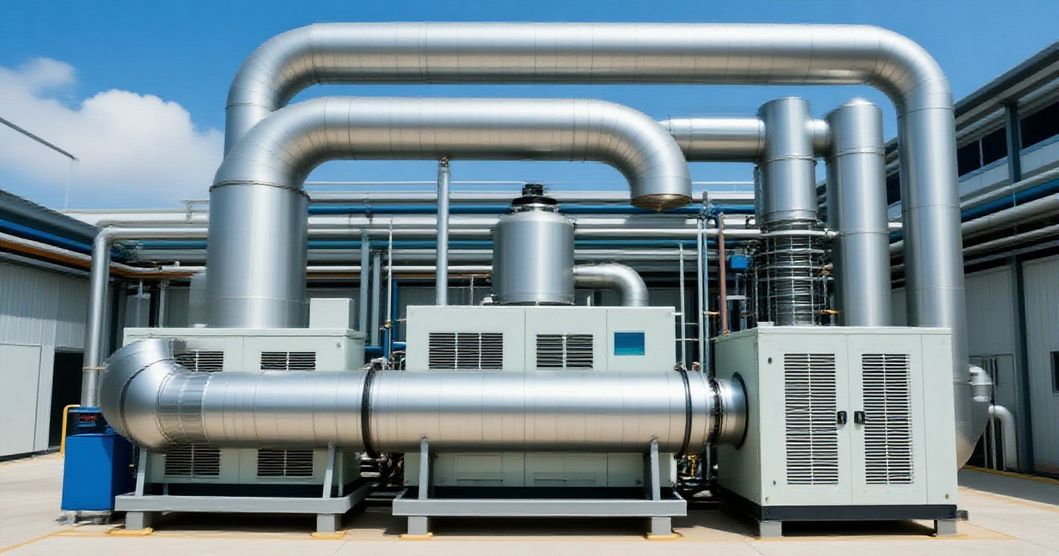
This brings us to a pressing and often overlooked contradiction. As data centers expand, often locating near urban centers or regions with stringent environmental mandates, global emissions regulations have tightened dramatically. Standards like the U.S. EPA’s Tier 4 and China’s National IV/VI for stationary engines impose strict limits on nitrogen oxides (NOx), particulate matter (PM), carbon monoxide (CO), and hydrocarbons (HC). The era of “black smoke” on startup or under load is unequivocally over. For a modern data center, even a single mandatory monthly test or an emergency run with a non-compliant generator can trigger regulatory violations, resulting in hefty fines, operational permits being revoked, and severe reputation damage. The backup system, if not properly managed, becomes a direct threat to the primary operation it is meant to protect.
The challenge is uniquely acute for data center generators. Unlike mobile or prime-power applications in trucks or construction machinery, data center gensets face a distinctive operational profile:
- Long-Term Standby:They remain inactive for over 99% of their life, posing risks of component degradation and moisture accumulation in exhaust systems.
- Instantaneous High-Load Demand:They must accept full, or near-full, data center load within seconds of startup. The aftertreatment system must achieve optimal conversion efficiency almost immediately, without the warm-up period typical in vehicular cycles.
- Exceptional Reliability & Low Maintenance:Any failure during a grid outage is unacceptable. The aftertreatment system must be as reliable as the engine itself, yet require minimal scheduled maintenance to avoid compromising system availability.
This “instant-on, full-power, always-ready” demand places extraordinary stress on exhaust aftertreatment technologies, requiring solutions that are far more robust and responsive than standard industrial applications.
Therefore, a paradigm shift in perception is essential. The exhaust aftertreatment system for a modern AI data center generator is no longer an optional add-on or a mere regulatory checkbox. It has become a standard and indispensable configuration that directly enables core business functions. It is the critical enabler that allows the backup power system to fulfill its role without introducing new operational or legal risks. By ensuring full compliance during every test and emergency event, it safeguards the data center’s license to operate. Furthermore, it is a cornerstone of meaningful ESG (Environmental, Social, and Governance) responsibility, allowing companies to meet stringent corporate sustainability targets and uphold their social license in an environmentally conscious world.
The integration of high-performance, ultra-reliable exhaust aftertreatment is now a non-negotiable element of data center critical infrastructure design. It transforms the backup power system from a potential liability into a fully compliant, reliable, and responsible pillar of the digital age.
In our next article, we will dive into the core technologies and system configurations required to meet these unique and demanding challenges.
(This article is the first in a series exploring exhaust aftertreatment for critical power systems. It is informed by industry expertise which addresses advanced emission control challenges.)